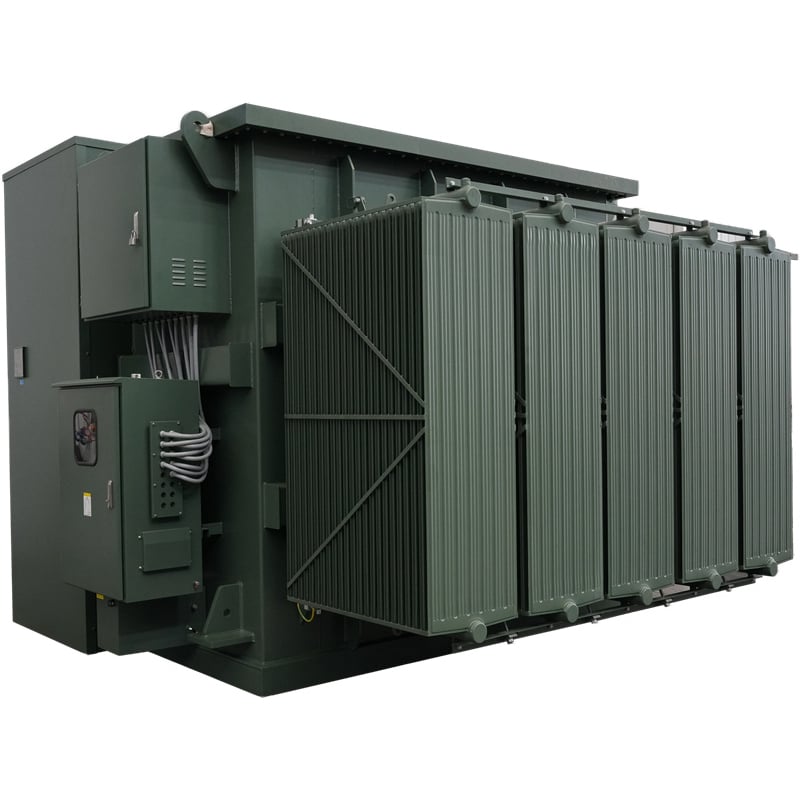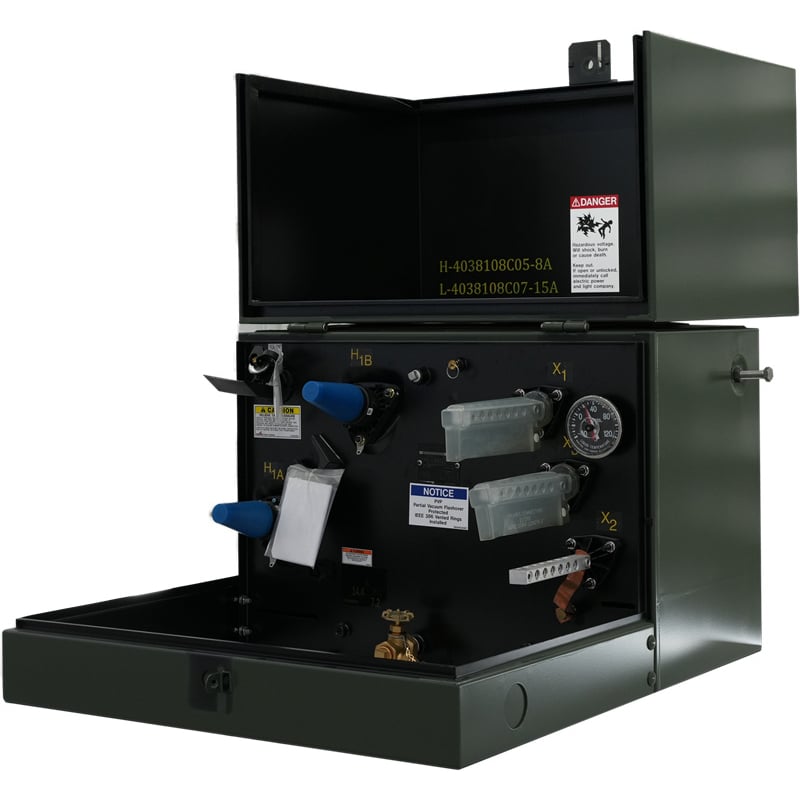
Up to 44 kV Single Phase Pad-Mounted Transformer
Residential neighborhoods, housing developments, light commercial loads, single-phase distribution networks.
- Voltage class
- Up to 44 kV
- Capacity range
- Up to 10,000 kVA


PRODUCT FAMILY / 3 LISTED PLATFORMS
Compare single- and three-phase platforms. Review the service, cable arrangement and installation interfaces before final selection.
Compare published ranges. Confirm the final configuration with our engineers.
CHOOSE BY PROJECT
Choose the closest product route, then compare the electrical scope and installation requirements.
RANGE AT A GLANCE
Listed options describe the product range. Final ratings, compatible combinations and performance are confirmed in the approved project datasheet.
On smaller screens, swipe the table to compare all columns.
| Product platform | Voltage class | Capacity range | Frequency | Cooling | Details |
|---|---|---|---|---|---|
| Up to 44 kV Single Phase Pad-Mounted Transformer | Up to 44 kV | Up to 10,000 kVA | 50 / 60 Hz | ONAN | View product — Up to 44 kV Single Phase Pad-Mounted Transformer |
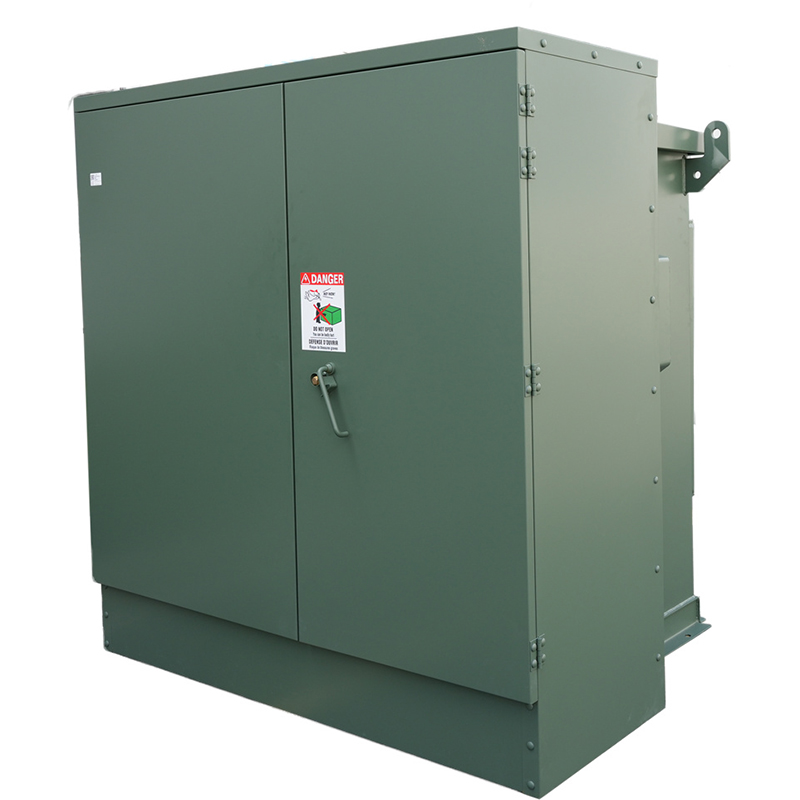
| Up to 44 kV Three Phase Pad-Mounted Transformer | Up to 44 kV | Up to 10,000 kVA | 50 / 60 Hz | ONAN | View product — Up to 44 kV Three Phase Pad-Mounted Transformer |
| Up to 66 kV Three Phase Pad-Mounted Transformer (10 MVA) | Up to 66 kV | Up to 10 MVA | 50 / 60 Hz | ONAN / ONAF | View product — Up to 66 kV Three Phase Pad-Mounted Transformer (10 MVA) |
Products
Open a platform for the published specifications, configuration options and project review points.
Residential neighborhoods, housing developments, light commercial loads, single-phase distribution networks.
Residential neighborhoods, housing developments, light commercial loads, three-phase distribution networks.
Distribution substations, renewable collector stations, industrial parks, commercial complexes.
BEFORE YOU ENQUIRE
Share the details you have. A short description is enough to begin; drawings and specifications can follow.
Request a QuotePhase configuration, primary and secondary voltage, capacity, frequency and radial or loop-feed requirements.
Cable entry, terminals, protection, enclosure access and the available installation footprint.
The actual utility specification, single-line diagram, layout, inspection scope and required compliance documents.
No. The cable compartments, adjoining equipment and installation interfaces differ. Use the relevant product page and layout to review the arrangement.
No. Approval and documentation requirements depend on the utility and project. Send the actual specification so the selected configuration and evidence can be reviewed.
An existing nameplate, photos, connection details, available footprint and the primary and secondary service are a useful start. Send what you have; missing values can be clarified.
Talk to an engineer
A short description is enough. We’ll help clarify the specifications.